

Click to Expand Table of Contents
Table of Contents
A smart-toilet QC plan must connect ceramic, water, electrical, electronic, firmware, assembly, and packaging checks to the exact model and lot, with failure containment and release authority. In practice, that means the first review page should show the decision, not a company history or promotional overview. Put ceramic fit, water circuit, and electrical check beside the evidence source and the person allowed to approve a deviation. A certificate image, sample photo, or verbal confirmation can be useful context, but it is not automatically proof for the selected model and order. The method below is deliberately restrained: it explains how to verify smart toilet quality control checklist without promising a universal quantity, price, lead time, capacity, inspection rate, certification, warranty result, freight reduction, customer outcome, or local support presence.
Protect release authority: define the audit scope before the visit
For smart toilet quality control checklist, the first control is to define what must be decided and who owns the decision. Write the expected result for ceramic fit, identify the document that will show it, and name the buyer and supplier roles that can approve a deviation. This prevents a broad sales answer from being mistaken for an order-specific commitment.
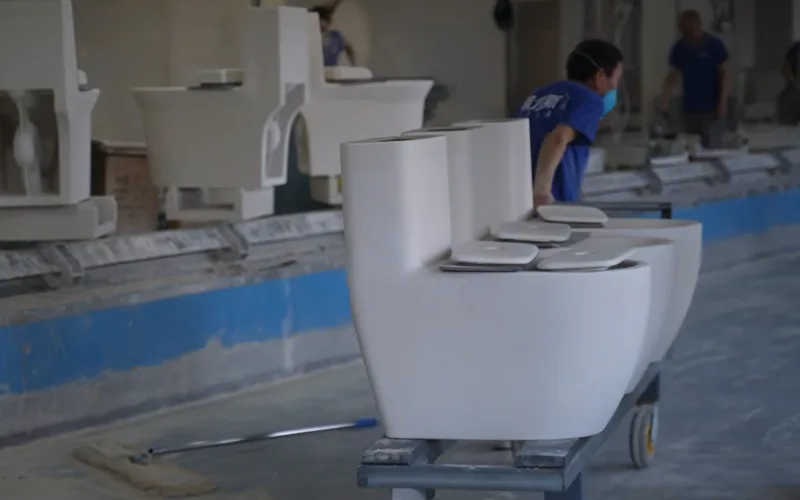
Review water circuit and electrical check together because a change in one can alter the other. The relevant evidence should carry the model or project reference, revision, date, and approval status. If the evidence applies only to a product family, record the limit and require confirmation that the selected configuration remains inside that scope.
Define evidence for ceramic fit
Record the result in a decision log with five fields: requirement, evidence reviewed, finding, open action, and approver. For this topic, the log should explicitly name ceramic fit, water circuit, and electrical check. Use photographs or videos only when their source, date, location, model, and permission are traceable; otherwise treat them as illustrations rather than proof.
| Risk interface | Verification method | Owner and gate |
| Ceramic Fit | drawing, specification, or controlled matrix | Does it match the selected model and destination? |
| Water Circuit | model-specific test or inspection record | Are the method, result, date, and failure action visible? |
| Electrical Check | official directory entry or current document | Do holder, model, status, and scope reconcile? |
| Firmware Version | approved sample and signed comparison | Can production repeat the approved baseline? |
| Assembly Record | packaging, loading, or service record | Is the risk controlled through delivery and use? |
| Release Authority | responsibility matrix and change log | Who can approve, reject, or release a change? |
Trace ceramic fit: follow evidence from process to record
Treat water circuit as a measurable interface rather than a descriptive feature. Record the datum, range, material, test condition, or decision rule that the order will use. This is especially important when smart toilet quality control checklist spans several models or destination markets.
Ask the supplier to demonstrate how electrical check is controlled when firmware version changes. A sound answer explains the change trigger, review owner, sample or test requirement, document revision, and release authority. An unsupported assurance that the factory ‘always does this’ is not equivalent to a controlled record.
Connect electrical check to the selected model
Record the result in a decision log with five fields: requirement, evidence reviewed, finding, open action, and approver. For this topic, the log should explicitly name water circuit, electrical check, and firmware version. Use photographs or videos only when their source, date, location, model, and permission are traceable; otherwise treat them as illustrations rather than proof.
Validate water circuit: inspect the highest-risk product interfaces
Evidence for electrical check should be proportional to the risk. A low-risk visual detail may need an approved reference, while a safety, compliance, hydraulic, structural, or installation interface may require a drawing, formal test, or official listing. The buyer should define that distinction before the sample arrives.
Do not review firmware version in isolation from assembly record. Compare the approved requirement with the sample, the production control, and the shipment record. When those layers disagree, pause release, identify the controlling version, and document the correction rather than accepting a verbal explanation.
Set an approval rule for assembly record
Record the result in a decision log with five fields: requirement, evidence reviewed, finding, open action, and approver. For this topic, the log should explicitly name electrical check, firmware version, and assembly record. Use photographs or videos only when their source, date, location, model, and permission are traceable; otherwise treat them as illustrations rather than proof.
Release electrical check: challenge tests and failure handling
A useful review of firmware version asks three questions: what can fail, how will the supplier detect it, and what evidence prevents recurrence? Apply the answers to the exact smart toilet quality control checklist configuration instead of extrapolating from a showroom unit.
For assembly record, request both the normal control and a recent redacted failure path. The failure path should show containment, disposition, responsibility, and closure. That record is often more informative than a perfect example because it shows whether release authority is managed under real production pressure.
Review failures, not just normal records
Record the result in a decision log with five fields: requirement, evidence reviewed, finding, open action, and approver. For this topic, the log should explicitly name firmware version, assembly record, and release authority. Use photographs or videos only when their source, date, location, model, and permission are traceable; otherwise treat them as illustrations rather than proof.
Reconcile firmware version: score capability and apply rejection gates

Convert assembly record into a gate with a clear status: verified, conditionally accepted, open, or rejected. A conditional acceptance should state the missing evidence, owner, due date, and consequence if it is not closed.
Link release authority to the purchasing file and ceramic fit to the release checklist. This makes the decision auditable and gives production, inspection, logistics, and service teams the same baseline. It also reduces the chance that an approved sample is silently replaced by a different configuration.
Use a gate instead of a vague score
Record the result in a decision log with five fields: requirement, evidence reviewed, finding, open action, and approver. For this topic, the log should explicitly name assembly record, release authority, and ceramic fit. Use photographs or videos only when their source, date, location, model, and permission are traceable; otherwise treat them as illustrations rather than proof.
Document assembly record: convert findings into an approval plan
The final plan should translate release authority into a contract attachment, approved specification, inspection point, or official verification step. Keep the wording narrow enough that it can be checked for the selected smart toilet quality control checklist model.
Before approval, reconcile ceramic fit with water circuit and list any unresolved assumptions. A commercially attractive proposal may still need a hold if a critical interface, compliance requirement, sample result, or responsibility remains unclear. Approval is strongest when the record explains both why the item passed and what conditions still apply.
Close the decision with named owners
Record the result in a decision log with five fields: requirement, evidence reviewed, finding, open action, and approver. For this topic, the log should explicitly name release authority, ceramic fit, and water circuit. Use photographs or videos only when their source, date, location, model, and permission are traceable; otherwise treat them as illustrations rather than proof.
Turn supplier answers into a controlled evidence pack
For smart toilet quality control checklist, the evidence pack should be compact enough to use and complete enough to defend the decision. At minimum, index the approved requirement for ceramic fit, the supporting record for water circuit, the model or project link for electrical check, and the release decision for release authority.
Use file names and revision numbers that remain stable when email attachments are downloaded. Keep original records separate from buyer summaries, and record the date an official directory was checked. If a document is pending, say so explicitly; do not convert a planned test, application, or supplier statement into a completed fact.
Keep internal proof and public wording separate
Editorial evidence records can list source references, open items, and restricted claims. Reader-facing wording should state only what the reviewed evidence supports. For VONDDW, this means avoiding unsupported claims about establishment date, export-country count, capacity, employee count, floor area, universal inspections, universal certifications, fixed MOQ, prototype timing, lead time, freight savings, warranty outcome, response time, customers, rankings, or overseas offices.
- Review the relevant product or service page as a starting point, then request order-specific evidence.
- Review the quality-control overview as a starting point, then request order-specific evidence.
- Review the contact page as a starting point, then request order-specific evidence.
Frequently asked questions
What is the most common evidence gap in smart toilet quality control checklist?
The gap is often not a missing document but a missing link between the document and the exact model. Reconcile ceramic fit, water circuit, and the destination before accepting a certificate, test, or sample record.
How much evidence is enough for electrical check?
Use evidence proportional to the consequence of failure. A visible cosmetic point may use an approved reference; a hydraulic, electrical, structural, installation, or compliance point usually needs a controlled method and result.
Should an open item always stop the order?
No. Classify it as verified, conditional, open, or rejected. Critical identity, safety, compliance, fit, or concealed-defect gaps should pause approval; lower-risk items may proceed only with an authorized written condition.
How should the buyer close release authority?
State the requirement, evidence reviewed, result, remaining condition, owner, and approval date. A traceable closeout is more useful than a general statement that the supplier has been checked.
A final cross-check should compare the quotation, approved sample, and production release for ceramic fit and water circuit. If the terminology differs, create a one-page reconciliation rather than assuming the documents mean the same thing.
Procurement teams should also decide how evidence for electrical check will be retained after shipment. A searchable record helps service teams identify whether a later issue is isolated, installation-related, component-related, or repeated across a lot.
When alternatives are proposed, evaluate them against the same requirement for firmware version. A lower-cost or faster option is not equivalent unless its interfaces, evidence, and responsibilities remain acceptable for the destination and use case.
Do not close the file at sample approval. Reconfirm assembly record at production release and release authority before shipment so changes introduced by sourcing, scheduling, labeling, or packing do not bypass the original decision.
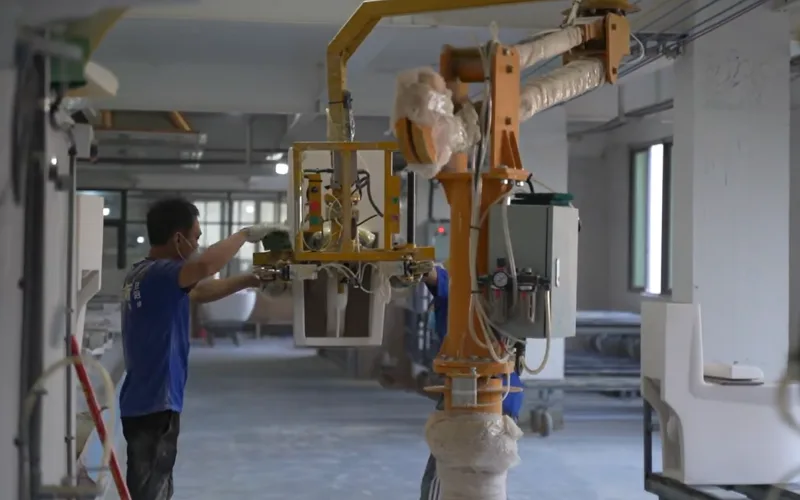
Leave the project with a traceable release decision
A smart-toilet QC plan must connect ceramic, water, electrical, electronic, firmware, assembly, and packaging checks to the exact model and lot, with failure containment and release authority. A useful closeout records both what passed and which conditions still apply to the order.
Before release, confirm that ceramic fit, water circuit, and release authority have a clear status and that every open item has a consequence. If you want VONDDW to review a project, share the destination market, product type, model or performance brief, drawings or rough-in, required functions, expected quantity range, target schedule, packaging needs, and the evidence you need with the quotation. The response should be treated as a project-specific starting point and verified before order approval.